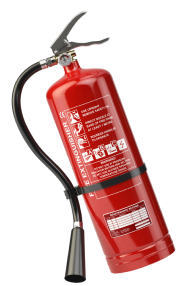
Fire Protection for Commercial Kitchen's

Considerations for Commercial Cooking Equipment in a Restaurant Kitchen

Commercial kitchens are hectic environments where multiple types of cooking equipment operate simultaneously. Ensuring fire safety is paramount, as kitchen fires can have devastating consequences. Master Fire Prevention has been trusted by restaurants, commercial cooking establishments, and food service businesses since 1969 to provide expert guidance and solutions. Here, we explore the essential fire protection considerations for various commercial cooking equipment in restaurant kitchens, including stoves, ovens, ranges, burners, rotisseries, steamers, griddles, woks, and fryers, along with the specific fire suppression equipment needed for each.

Fast Reliable Services

There are inmaniy variations passages of Lorem Ipsum available, but the majority

Fire protection in commercial kitchens requires diligent attention to the specific risks associated with each type of cooking equipment. Implementing robust fire suppression systems, maintaining regular cleaning schedules, and conducting frequent equipment inspections are critical steps in preventing kitchen fires. By adhering to these fire safety considerations and installing the appropriate fire suppression equipment, restaurant owners can create a safer environment for their staff and patrons. For over half a century, Master Fire Prevention has been the trusted partner for fire safety in restaurants, commercial cooking establishments, and food service businesses, ensuring peace of mind through comprehensive fire protection solutions.

Why Choose us

Licensed by NYC Fire Department
Fire Extinguisher C of F # 148

Stove and Oven Safety
Stoves and ovens are the heart of any kitchen, but they also pose significant fire risks. To mitigate these risks, install automatic fire suppression systems, such as hood suppression systems, which activate when they detect high temperatures or flames. These systems often include wet chemical agents that can quickly extinguish grease fires. Additionally, ensure that fire extinguishers rated for Class K fires are easily accessible. Regular maintenance and inspection of these systems are essential to ensure they function correctly when needed.

Range and Burner Precautions
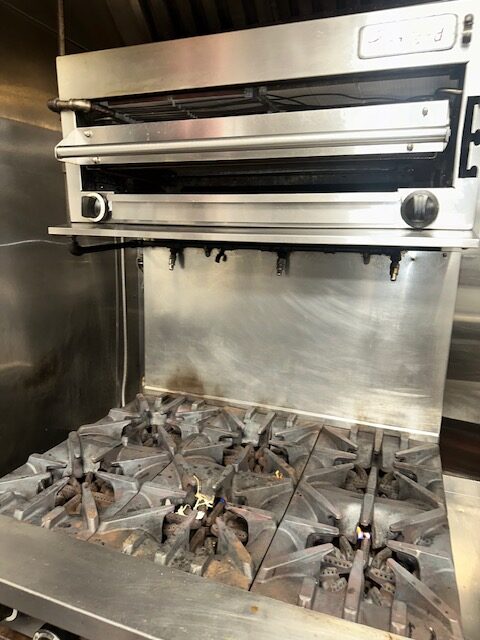
Ranges and burners are commonly used for a variety of cooking tasks. To prevent fires, use high-quality, heat-resistant materials for nearby surfaces and backsplashes. Ensure that burners are kept clean and free of grease. Gas ranges require regular inspections to check for leaks, and proper ventilation must be maintained to avoid gas accumulation. Flame supervision devices, which can cut off gas supply if a flame is accidentally extinguished, are crucial. Overhead automatic fire suppression systems that release wet chemical agents should be installed and routinely checked.

Rotisserie Fire Protection
Rotisseries involve constant rotation and exposure to high heat, increasing the risk of grease fires. Position rotisseries away from flammable materials and ensure they have adequate ventilation. Utilize drip pans to catch excess grease, and clean these pans regularly to prevent overflow. For fire suppression, install dedicated hood suppression systems that release wet chemicals when detecting high temperatures or flames. Portable Class K fire extinguishers should also be accessible.

Contact with us

Feel Free to Write us Anytime